
Sugar Land Resident Lookup Coverage
There is no official database of all Sugar Land residents. A resident lookup is instead a documented comparison of records held by different custodians. Fort Bend CAD can identify an owner display, parcel identifiers, a situs, and appraisal context. The recorder identifies parties to recorded instruments. Courts identify parties to cases. State and local vital, voter, obituary, and custody sources each answer narrower questions. Keep the role printed by the source. An owner, grantor, voter registrant, permit applicant, business officer, defendant, inmate, and obituary subject are not interchangeable roles.
| Record | What It Confirms | Where | Access |
|---|---|---|---|
| CAD parcel record | Owner display, situs, parcel identifier, value, and legal or size context | Fort Bend CAD Property Search | Public display; owner is not automatically an occupant or conclusive title proof |
| Recorded instrument | Grantor or grantee role, recorded date, legal description, and transfer trail | Fort Bend Official Public Records | Party and legal-description search; image and copy fees can apply |
| Court case | Party name, case number, type, filing, status, register, and available documents | Fort Bend Odyssey | Coverage and redactions vary by court and record series |
| Voter record | Registration name, status, and address concepts subject to exceptions | Fort Bend Voter Inquiry | Protected fields and alternate-address limits apply |
| Vital index | Marriage, divorce, birth, or death event lead and custodian | Texas DSHS Vital Statistics | Index access differs from eligibility for a certified copy |
| Obituary or burial record | Death date, relatives, cemetery, and historical community clues | Fort Bend obituary database | Newspaper coverage and scans are incomplete |
| Business or license record | Entity role, filing address, license status, or agency record | Texas SOSDirect and the issuing state board | Role-based address is not proof of a personal residence |
Start with the record that matches what is already known. An address can lead to a parcel and dated instrument. A case number belongs in the court portal first. A marriage or divorce question belongs with DSHS and the proper local custodian. Use a library obituary result as a family-history lead, then corroborate it with a record from the office that holds the event or property record.
Sugar Land Court Search in Odyssey
Fort Bend County Clerk Odyssey is the principal online court route for a name-based Sugar Land resident lookup. Its public landing page separates Probate, Civil, Family, Criminal, and Court Calendar areas. Help material describes searches by Case, Party, Attorney, and Date Filed. Criminal searches add Defendant and Citation, while calendar searches add Attorney, Case, date range, judicial officer, and party or defendant name. A result case number opens the case page, then the Register of Actions, which can lead to PDF or TIFF document images when available.
Search only the court and date range that fit the question. The instructions say wildcard and Soundex searches cannot be combined. A wildcard needs at least one first- or last-name character, and case or cross-reference searches need at least four characters other than dashes. Civil, family, and probate screens can be narrowed by status, filed-date range, and case type. Capture the spelling, filters, and date used. That record of the search helps distinguish a no-match from an overly broad query.
The Fort Bend Odyssey Public Access portal separates court areas before a case search begins.
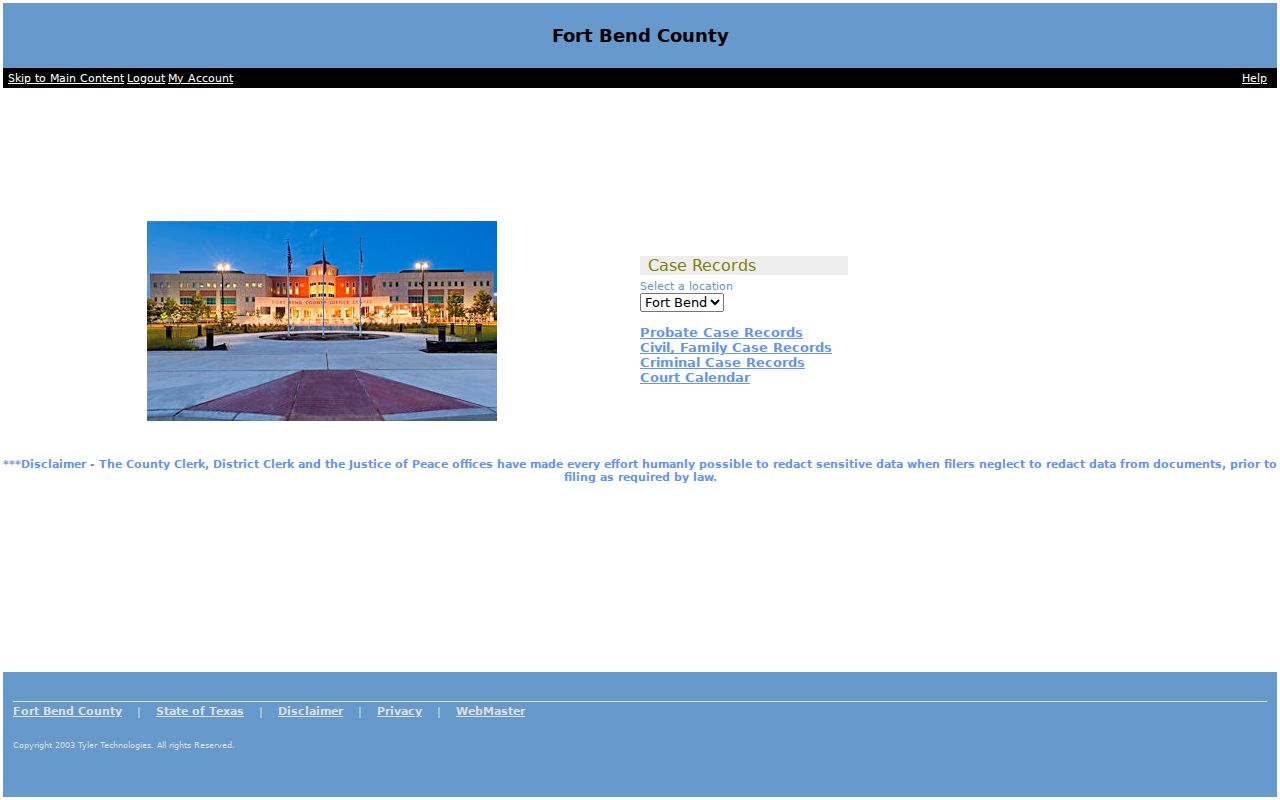
The separate areas and fields are a reminder that a party result needs the correct court, case type, and date range before it can be compared with another record.
| Case number | The linked identifier that opens the selected court case. |
|---|---|
| Party or defendant | The role and name used in the case, not a statement about residence. |
| Filed and status fields | Dates and case posture that help separate similar names. |
| Charge or case type | The court category or case classification displayed by the system. |
| Register of Actions | A sequence of case events, orders, and related fields. |
| Document route | Available PDF or TIFF images, subject to redaction and access limits. |
Sugar Land Municipal Court Limits
Sugar Land Municipal Court is separate from the county courts. It is a court of record for Class C misdemeanor matters within city territorial limits. The online services route can show upcoming dockets, court dates, final dispositions, fines, and fees. A new ticket can take one to three business days to appear. Final dispositions that are five or more years old are removed from online display. A blank municipal result may therefore reflect the court's online limits, a timing issue, or a record held in another court system.
Use the record that the court actually provides. An arrest, accusation, docket entry, bond field, or filed case does not establish a final disposition. For a court record that needs confirmation, use the case number and contact the court at 281-275-2900. Judicial records are not handled as ordinary Texas Public Information Act requests. A written request to the court custodian should identify the existing record and include enough detail for the clerk to locate it.
The Sugar Land Online Court Services page identifies the public lookup, payment, and document routes.
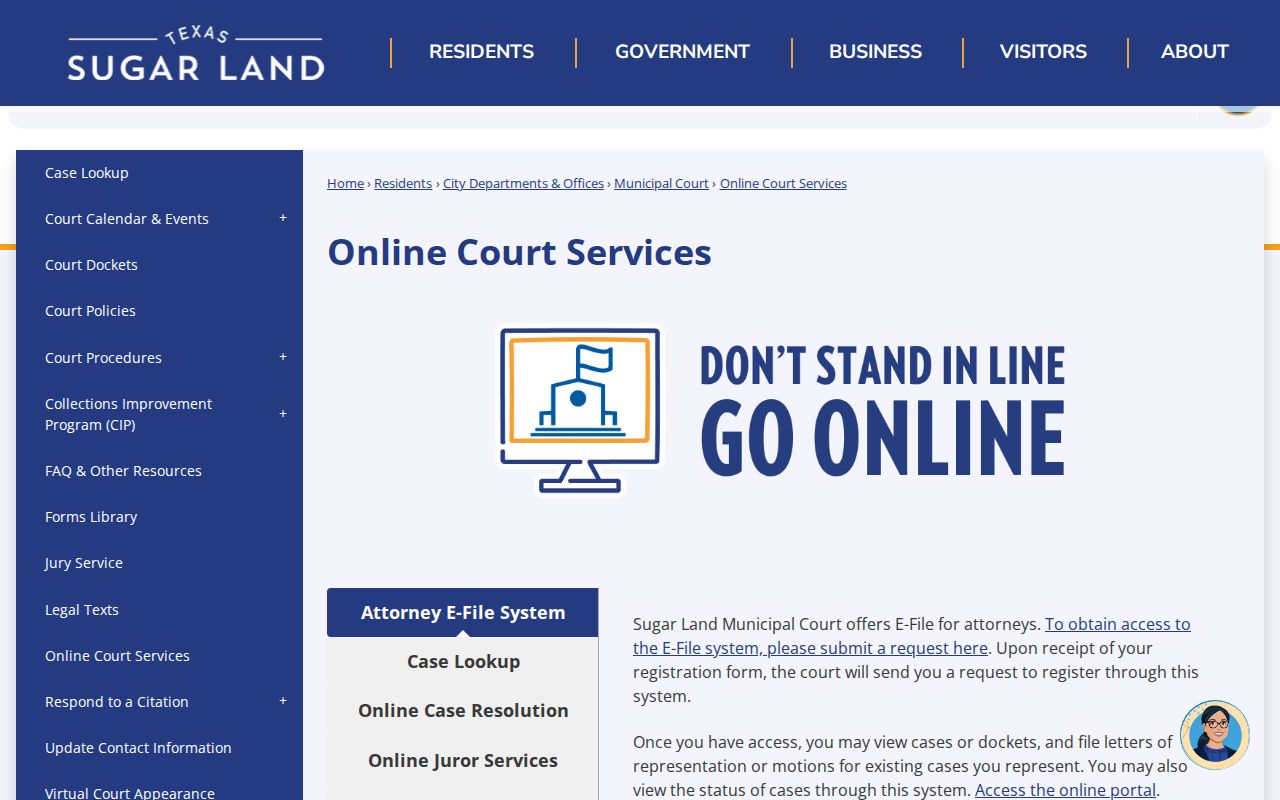
Use the municipal screen for its own Class C matters, then verify the returned court date or final disposition with the custodian.
Sugar Land Court Systems Compared
Court systems are not interchangeable. The comparison is important when a name appears in one place but not another. Fort Bend County Clerk civil and family coverage is generally 1983 forward, misdemeanor and appeal coverage is generally 1983 forward, and probate is generally 1987 forward, with historical probate volumes and indexes for 1838-1956. The District Clerk historic route covers criminal, civil, and family material from 1821-1980 through QuickLink and the Historic Documents Room. Municipal Court holds its own city-level Class C matters. Federal matters use the Southern District of Texas, Houston Division, and PACER.
| County Clerk Odyssey | Modern county civil, family, criminal, probate, and calendar searching with coverage and image limits by record set. |
|---|---|
| District Clerk QuickLink | Historic criminal, civil, and family index and minute-book route for 1821-1980; document purchase or office research may be needed. |
| Sugar Land Municipal Court | City territorial Class C matters, with current online timing and older-disposition limits. |
| PACER | Separate federal docket and copy system; research notes list $0.10 per page and a $3 document cap except transcripts. |
When a web index has no image, the District Clerk's Historic Documents Room is an alternate channel. The county’s 2024 announcement says appointments are required and gives 281-341-4509 and distclerk@fortbendcountytx.gov. Ask for the record series, case number, and copy procedure. Sealed, juvenile, expunged, adoption, and other restricted files are not ordinary public search results.
Sugar Land Vital Records Search
Texas DSHS vital indexes can help test a name, family event, date, and county, but an index is not the underlying certificate. DSHS publishes public marriage indexes since 1966 and divorce indexes since 1968. The index fields can include file number, both names, ages, marriage date and place, children under 18 where present, dissolution date where present, and county name or code. DSHS warns that misspellings occur and that the indexes are locating aids, not legal documents. Pre-1966 marriage and pre-1968 divorce research should move to the local clerk or an archival collection.
Custody matters. A certified marriage-license copy comes from the county clerk where the license was filed, while a certified divorce decree comes from the district clerk where it was granted. DSHS supplies statewide certificates, verifications, forms, and indexes. Birth records become public after the 75th anniversary and death records after the 25th anniversary under Texas Government Code §552.115. Before those thresholds, certificates follow qualified-applicant or direct-tangible-interest rules. Fetal-death records are confidential. Use the product that fits the question, then request it through the proper state or local route.
The Texas DSHS vital applications and forms page lists the state forms for birth, death, marriage, divorce, adoption, and paternity records.
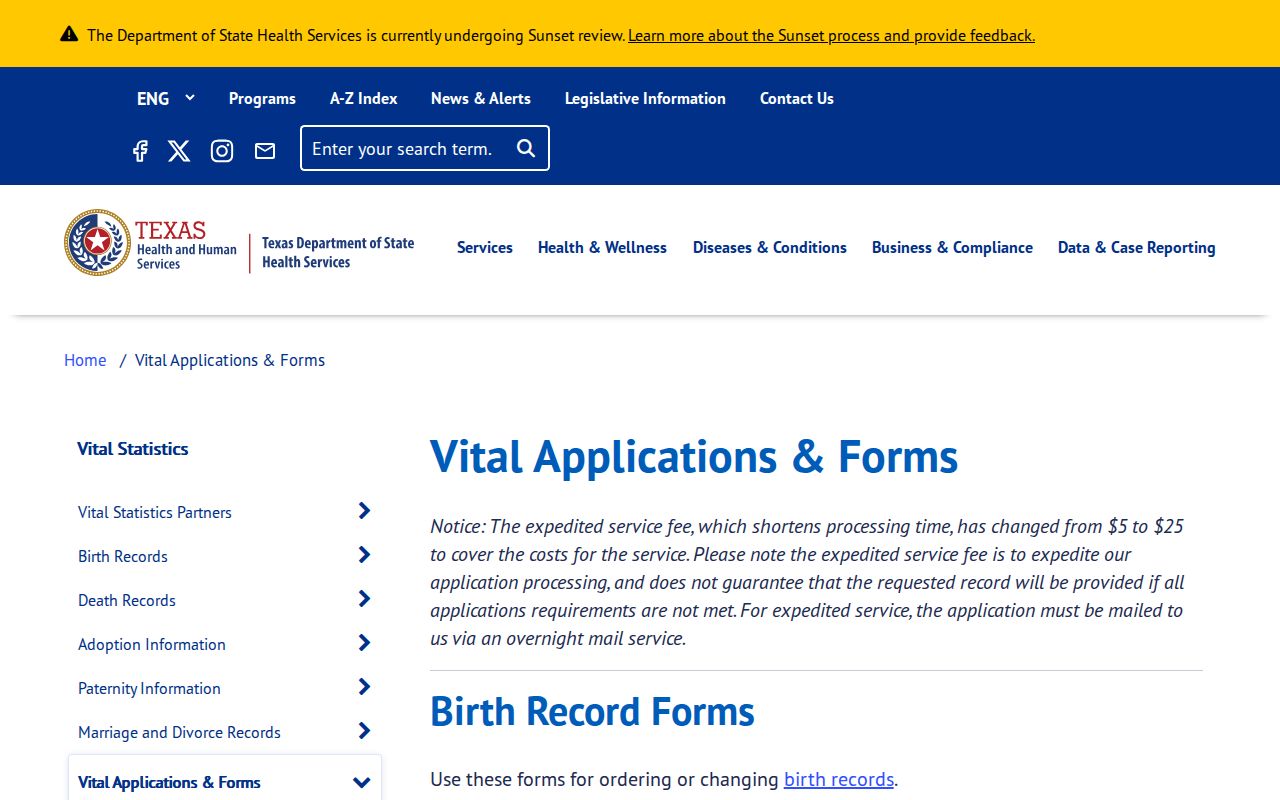
The available forms help separate an index request, a verification, and a certified record request before personal documents are submitted.
For digital birth and death index research, DSHS lists digital birth coverage from 1925 onward and death coverage from 1965 onward at $10 per year. Earlier microfiche begins in 1903, with fee information supplied on request. The VS-142.9 marriage-or-divorce mail form requires the record type, names, date and place, a government photo-ID copy, signature, date, and payment.
Sugar Land Voter Search Fields
Fort Bend Voter Inquiry is a public individual-lookup route, not a current-residence guarantee. The inspected form displayed a search-method dropdown, VUID input, date-of-birth input, first-name input, last-name input, and search controls. The text capture did not expose the dropdown labels or result behavior. Treat those exact fields as a live-screen detail to confirm before entering personal information. A visible registration can be inactive, suspense, cancelled, confidential, or tied to an address that still needs a separate record check.
| Field | Type | Observed Requirement | Format Note |
|---|---|---|---|
| Search method | Dropdown | Required choice implied | Option labels were not exposed in the inspected text capture |
| VUID | Text input | Conditional to the VUID method | No spaces or slashes; pair with date of birth as instructed |
| Date of birth | Text or date input | Conditional in the displayed workflow | Do not reproduce a full value |
| First name | Text input | Conditional to the name method | Partial-name behavior was not confirmed |
| Last name | Text input | Conditional to the name method | Keep the searched spelling and result date |
Texas Election Code §18.005 makes voter-list content public subject to exceptions. Public concepts can include name, date of birth, VUID, residence address subject to exceptions, and elections voted. Ballot choices are not public voter-list fields. Election Code §13.004 protects Social Security numbers, driver-license and personal-ID numbers, and related identifiers. The county warns that voter information may not be used for commercial advertising or promotion.
Verifying a Sugar Land Resident
Verification means testing whether two records describe the same person, not collecting every result for a name. Use two independent identifiers, such as a full name plus a specific address, a full name plus a dated event, or a name plus a court or instrument number. Search spelling variants, initials, suffixes, maiden names, and middle names. Recorder instructions use LASTNAME FIRSTNAME. The local obituary database supports wildcards, Jail Inquiry supports partial names, and TDCJ IVSS supports an asterisk wildcard. Record each query and search date so a false match can be rejected later.
- Anchor the name to a dated official record. A CAD parcel card, recorded instrument, court case, obituary, or vital index can supply the first role and date.
- Compare a second independent record. Match the date, address or place, record role, and any official identifier that is appropriate to use.
- Run the court party search with the correct court, date range, and name variation. Read the Register of Actions or final order instead of inferring a result from a case listing.
- Use the vital index or county custodian to test a family-event lead. Request a verification or certified copy only when the rules and purpose allow it.
- Date every conclusion. If independent identifiers do not line up, describe the match as unresolved rather than making a negative claim.
- Docket
- A court's running record of a case and its events. It is not, by itself, a final disposition.
- Index versus image
- An index points to a record. An image is a reproduction of the underlying document, which can still be redacted or restricted.
- Certified copy
- A copy issued and authenticated by the official custodian. Eligibility, fee, and request route depend on the record type.
Sugar Land Custody Record Checks
Custody and registry systems need special care. Fort Bend Jail Inquiry provides full or partial last-name and first-name fields, a Search action, and a detail route after selecting a name. The county says the automatic report is not a conviction record, an arrested person is presumed innocent, and roughly four hours may pass after booking before bonding confirmation. A jail hit is a time-specific custody lead. Do not turn it into a conclusion about the person or a lasting status.
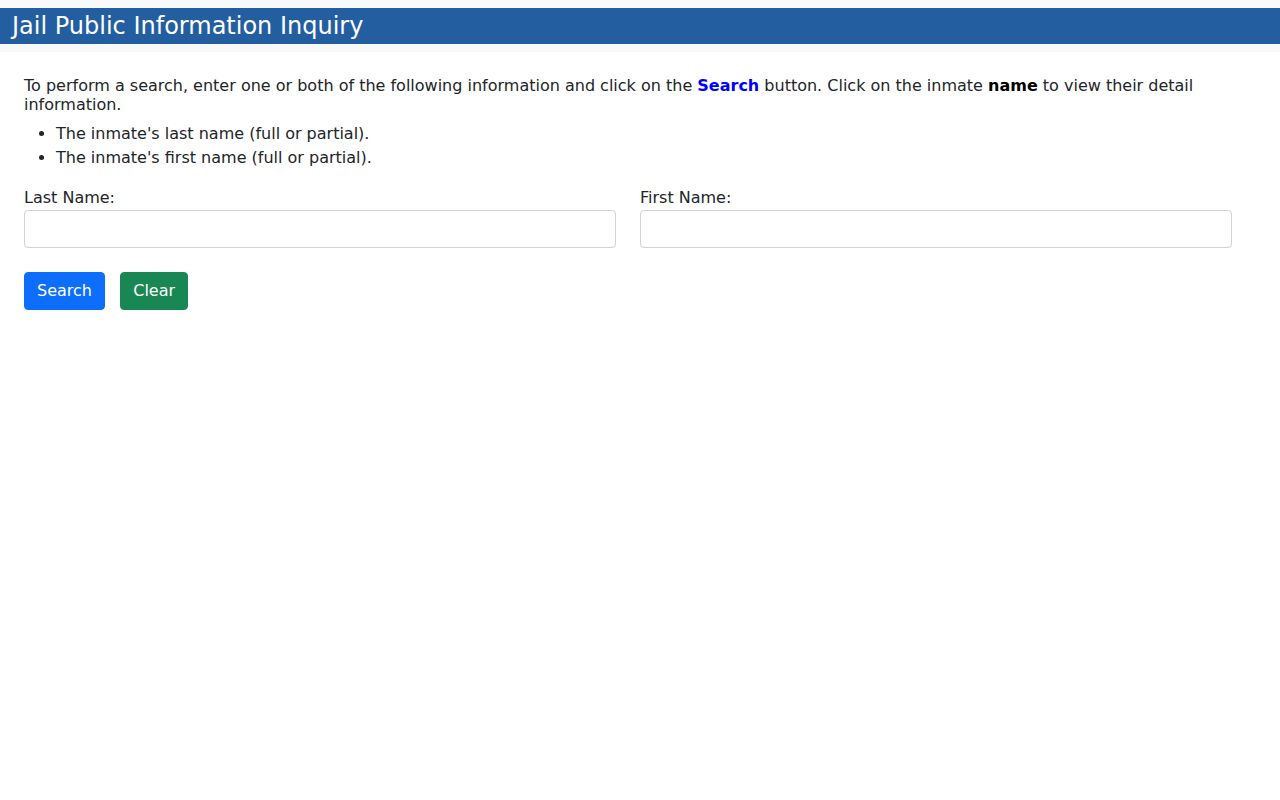
When the detail screen lawfully displays them, record the booking date, facility, charge or booking identifier, bond or status, and release or disposition fields with the capture date.
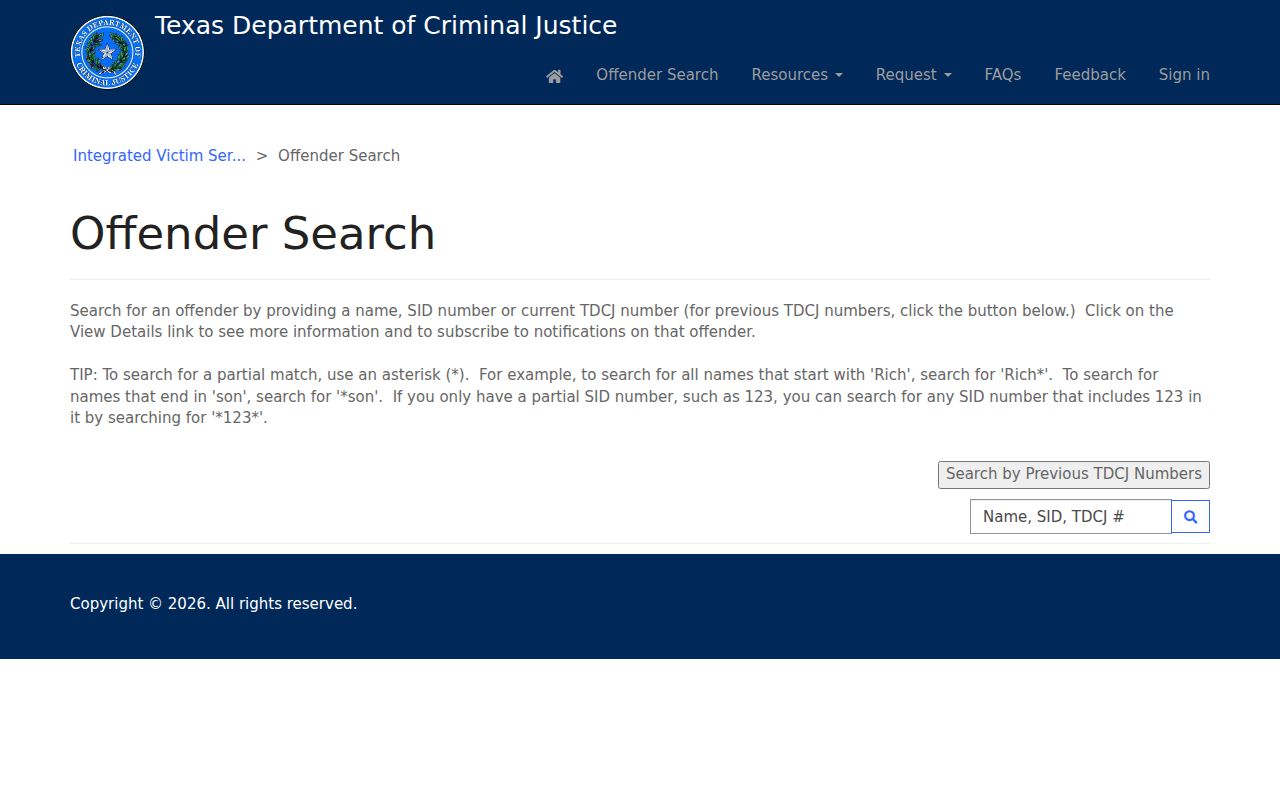
TDCJ IVSS is a separate state-custody system. It searches by name, SID, current TDCJ number, or previous TDCJ number, and an asterisk can broaden a name search. Its View Details route and victim-notification registration are different functions. A blank result in county custody, state custody, or a registry says only that the record was not located in that system at that time. Federal custody is separate again through the Bureau of Prisons Inmate Locator.
DPS also warns that name-based criminal-history searching can create false matches and that fingerprints are more accurate. Use an official identifier only where the system lawfully supplies it, and keep results narrow and dated.
Sugar Land Resident Record Limits
Public availability does not remove privacy obligations. Texas alternate-address rules protect some voter residence information, and the Attorney General Address Confidentiality Program can provide eligible participants with a substitute post-office box and mail forwarding. Do not try to reconstruct a protected address from a different source. Court portals redact or withhold sensitive information. Vital certificates have eligibility rules. Motor-vehicle personal information is limited by federal law. A record that is technically visible may still contain more personal detail than is needed for a lawful personal research question.
Use the minimum fields needed to confirm identity. Do not reproduce full dates of birth, Social Security numbers, driver-license numbers, personal phone or email, victim information, medical information, children's information, or modern certificate images. If a record needs correction, confidentiality, or suppression, use the official custodian's process. The Texas Public Information Act supports requests for existing governmental records, but it does not require a public body to answer a question, create a report, or perform legal research.
Lawful personal use. Use a Sugar Land resident lookup for a lawful, narrow purpose such as family history, an estate question, reconnecting with a relative, or checking a record's source. Never use a result to stalk, harass, intimidate, or harm another person.
Note: A no-match can reflect a protected record, a coverage gap, a name variation, or a different custodian, not proof that a person is absent.